
Snohomish, Skagit, and Whatcom counties, Washington
Septic system replacement
Replacing a failed septic system in the North Sound is four jobs in sequence, not one: a soil and site evaluation, a designer, a county permit, and a contractor certified by the county to install. On the slow-draining ground common in Snohomish, Skagit, and Whatcom counties, what the designer comes back with is often a mound or pressure distribution system rather than a gravity drainfield.
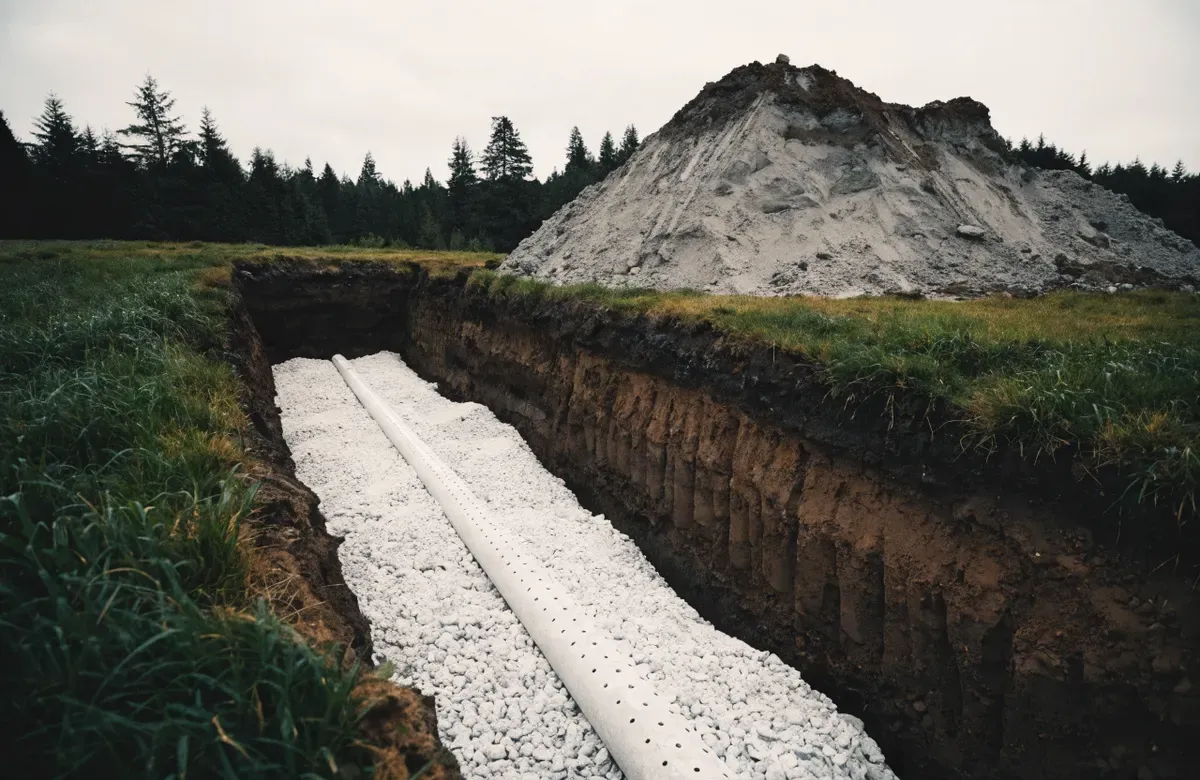
This is the expensive end of a septic problem. Below: the sequence in order, what drives the cost, and what a replacement does to a sale already under contract.
How do you know a septic system needs replacing?
Rarely from one dramatic event. A system declines for a while first, and the signs are easy to explain away one at a time. Together they are the pattern that ends in replacement rather than repair.
- Soggy ground or standing water over the drainfield during a dry stretch.
- A sewage smell outdoors near the tank or field, rather than only at a fixture indoors.
- Slow drains and gurgling across the whole house at once. One slow sink is plumbing; every drain at once points outside.
- Backups that return soon after a pump out. The interval between them tells you how fast the drainfield is going.
- An alarm on the control panel of a pumped system, or a panel silenced and left.
- A strip of unusually green, fast-growing grass tracking the drainfield lines.
- A transfer inspection the county will not accept, which is how many owners find out.
None of these confirms a replacement on its own. A soil and site evaluation settles it, because the real question is whether the ground under the drainfield still works. If a failed inspection is why you are here, the failed septic inspection guide puts the decisions in order.
Why North Sound ground often rules out a gravity drainfield
A drainfield does not dispose of effluent, it treats it. The soil beneath the trenches has to be unsaturated for treatment to finish before the water reaches groundwater. That is the design premise North Sound geography interferes with.
Much of the lowland here drains slowly and sits over a high winter water table. For part of the year the unsaturated depth a gravity field relies on is not there, so a designer cannot show the county a trench system that performs, and the county will not permit one. The answer is to build the treatment zone instead of hoping to find it: raise it above natural grade, or dose effluent evenly under pressure rather than letting gravity concentrate it at the near end of a line. That is why so many properties across Snohomish, Skagit, and Whatcom counties run pumped systems, and why replacement here tends to cost more than the same job in a drier county.
What is a mound or pressure distribution system?
A mound system builds the drainfield above natural ground in engineered sand, so the unsaturated depth exists by construction. A pressure distribution system pumps effluent through small-orifice laterals so it lands evenly across the treatment area instead of pooling at one end. Many North Sound designs use both.
The practical difference for an owner is the moving parts. A pump chamber, a dosing pump, float switches, and a control panel with an alarm are all things a gravity system does not have. That shows up in the state rule too: WAC 246-272A-0270 sets routine inspection at least once every three years for a basic septic tank and drainfield system, and once a year for every other type of system, unless the local health officer requires it more often. A mound or pressure system is not a basic septic tank and drainfield system, so it falls in the yearly group. Read the rule at leg.wa.gov (checked 2026-09-15). The mound and pressure distribution page covers how these systems are built and what living with one involves.
What is the sequence for a septic system replacement?
Four stages, in this order, each a separate booking with a separate business or office. Skipping ahead to an installer before there is a permitted design is the most common way people lose a month.
- Soil and site evaluation. Test pits, a logged soil profile, depth to the water table, and the slope and setbacks. This stage decides what can be built, so it decides the budget more than any other.
- Design. A designer turns the soil log into a system the county will permit, sized to the house. Ask which stages the county has to see before the work is covered, so the installer can schedule around them.
- County permit. The health department reviews the design and issues the permit. This is a queue, not an appointment, and it is the stage least under your control.
- Installation. A contractor certified by the county health department for installation builds the system. Installation certification is a different credential from the operation and maintenance certification that covers inspections, so ask which one the business holds and for which county.
There is no statewide septic credential in Washington. What counts is county certification for the specific work, plus registration of the contracting business with Washington Labor and Industries. Both are free to check in the panel below.
Get a free quote for a septic replacement
How long does a septic system replacement take?
Plan in months, not weeks. The build itself is the short part. The three stages in front of it are queues, and two of them are seasonal, which surprises people who assumed this was a week of machinery in the yard.
Ask the evaluator early whether the soil work has to happen in the wet season, because a water table reading taken in August answers a different question than one taken in February. Ask the designer how long the county is currently taking on permit review, and the installer how far out they are booking.
This page publishes no week count. The queue at each stage is set by the county and the season, and a number typed here would be a guess a seller might plan a closing date around.
What does a replacement cost in the North Sound?
No figure appears here, and that is deliberate. Replacement has the widest price spread of anything on this site, and no local figure has been read at a primary source yet. What we can give you is what moves the number.
- System type. A gravity drainfield on well-drained ground and a mound on wet ground are different builds, with different materials and machinery.
- Imported material. A mound needs engineered sand brought in and placed. That is trucking as well as material.
- Access. Whether an excavator can reach the work area, and what it has to cross to get there.
- Removal. Whether the old tank and field have to be decommissioned, which the county decides.
- Professional fees. The soil evaluation, the design, and the county permit are separate charges from separate parties. None of them sits inside the installer's price.
The county permit fee is published by the county and changes when the county revises its schedule, so ask the health department for the current figure when you apply. The North Sound septic replacement cost guide works through these drivers in more detail.
How does a replacement interact with a pending sale?
A failed system does not end a sale by itself. It changes what the contract has to account for, and the timeline is the hard part: a replacement runs on county queues while a purchase and sale agreement runs on agreed dates, and those calendars do not naturally line up.
The routes sellers generally have are to finish the replacement before closing, to agree a price adjustment with a buyer who now knows the scope, or to hand over a permitted design for the buyer to complete. Which your contract allows, and how funds are held if the work straddles closing, is for your agent and escrow. This site does not give legal advice.
One piece of good news on timing. In Snohomish County an accepted Report of Property Transfer is valid 12 months from the date the health department accepts it, so a system replaced and reported early is not wasted paperwork later. Source: Snohomish County Health Department (checked 2026-09-15). What each county asks for at transfer, and the statewide rule arriving February 1, 2027, are set out in the North Sound septic transfer rules guide, with county detail on the Snohomish County page and the Skagit County page.
If you have not had the inspection yet, the property transfer inspection page explains what the visit covers and why doing it before you list is the cheaper order.
How the quote works
Tell us the county and what the property needs. Your details go to one independent local septic contractor certified by that county health department, usually within about an hour during the day, not a national lead list. Homeowners are never charged; the professional pays a referral fee, and it does not increase what you pay. North Sound Septic Pros does not inspect, pump, repair, install, design, or permit septic systems.
Common questions
How do I know whether my septic system needs replacing or just repairing?
What failed decides it. A cracked baffle, a failed pump, a blocked line, or a control panel fault are components, and those are usually repairs. A drainfield that no longer accepts water is usually a replacement, because the soil has reached the end of its working life. A soil and site evaluation settles it.
Why would I need a mound system instead of a regular drainfield?
A drainfield needs unsaturated soil beneath it to finish treating the effluent. Much of the North Sound lowland drains slowly and sits over a high winter water table, so that depth is not there for part of the year. A mound or pressure distribution system raises and doses the treatment zone instead.
How long does a septic system replacement take?
Plan in months, not weeks. It is four bookings in sequence: a soil and site evaluation, a designer, the county permit review, and a contractor certified by the county to install. This page publishes no week count, because the queue at each stage is set by the county and the season.
Can I sell the house before the replacement is finished?
That is a contract question for your agent and escrow. The routes sellers generally have are to finish the replacement before closing, to agree a price adjustment with the buyer, or to hand over a permitted design the buyer completes. Either way the county needs its own paperwork satisfied before the transfer.
Check your septic transfer requirements in the North Sound
Every figure below links to the county or state page it came from, so you can confirm it yourself rather than take our word for it.
The statewide rule that arrives February 1, 2027
Washington rule WAC 246-272A-0270 adds a property transfer inspection statewide beginning February 1, 2027. It has to be done by a third party inspector the local health officer authorizes. Between sales, the same rule sets the routine schedule: at least once every three years for a basic septic tank and drainfield system, and once a year for every other type of system, unless the local health officer requires it more often. Read WAC 246-272A-0270 (checked 2026-09-15).
What your county requires now
-
Snohomish County
Selling a Snohomish County home on a septic system requires a Report of Property Transfer reviewed by the health department before closing.
In force from November 1, 2026.
Who can do it: a certified septic contractor
Who is responsible: the seller.
Timing: 12 months from the date the health department accepts it.
If the county has no as-built record of the system, a certified septic contractor must draw an On-Site Sewage System Site Plan and it is submitted with the application.
-
Skagit County
Skagit County requires an operation and maintenance inspection by a certified O and M specialist before any property transfer, unless one was already done in the six months before it.
Who can do it: a certified operations and maintenance specialist
Timing: an inspection done in the six months before the transfer already satisfies it, so a recent one can carry the sale.
A system with a proprietary treatment product has to be inspected every year by a certified operations and maintenance specialist, separately from anything a sale triggers.
-
Whatcom County
A Whatcom County home offered for sale must have a current Report of System Status, a ROSS, on file with the county.
Who can do it: an Operations and Maintenance Specialist licensed by the county. A homeowner may not evaluate their own system when the evaluation is for a sale or property transfer.
Timing: evaluations are required every three years for a conventional gravity system and once a year for every other type.
How to check the contractor yourself
-
Check the county certification for the work you need
A transfer inspection has to be done by a specialist the county health department certifies for operation and maintenance work. Installing a replacement system is a separate certification. Ask which one the contractor holds, and for which county.
-
Check the contractor registration with Washington Labor and Industries
Every contracting business working in Washington must be registered with L and I, which is a bond and insurance filing rather than a skills exam. You can look up the registration and see whether the bond is active. Verify a contractor with Washington L and I
Three questions worth asking before you hire
- Which county certification do you hold, and does it cover the work my sale actually needs?
- Is the report you produce the one my county health department accepts, and do you file it or do I?
- If the system fails, what are my options, and are you certified to do that repair or replacement too?
What it costs, and what happens after you send it
- What does septic work cost in the North Sound?
- No septic replacement price appears on this site, and that is deliberate rather than an omission. Nothing here is published until it has been read at a primary source, and no verified North Sound replacement figure has been. A range taken from a competitor page or a national average would be a guess wearing a number. Ranges for this work are wide enough to be useless anyway. The gap between the cheapest and the most expensive job on the same road can be several multiples, driven by ground conditions you cannot see from the street. System type is the largest lever, and your land sets it: a gravity drainfield, a pressure distribution system with a pump and control panel, and a raised mound are three different projects, and soil and water table decide which one your lot can take rather than preference. The certified installer who walks the lot is the only honest source of that number, and in Washington the system designer is a separately licensed role, so ask whether a quote includes the design, the permit, removing the old tank, and restoring the yard. The cost drivers guide walks through all seven, so a real quote makes sense when you have one in front of you.
- How fast will someone get back to me?
- Your request goes to an independent licensed local septic contractor, usually within about an hour during the day. That contractor then contacts you to look at the lot and quote the work on their own schedule.
- What work is covered?
- Property transfer inspections, septic system replacement, new system installation, mound and pressure distribution systems, repair, operation and maintenance, and pumping. See every service.
Only a licensed contractor standing on your property can price your actual system.
What your county actually requires
Tell us the county and what the property needs. The quote is free, and there is no obligation to book the work.
Your request goes straight to one independent local septic contractor certified by your county health department, serving Snohomish, Skagit, or Whatcom county. It does not go to a national lead list.